
Why the Pomodoro Technique Needs a Makeover for Flow States
- D.Bhatta, MA

- Feb 23
- 3 min read
Key Takeaways
- Traditional Pomodoro intervals often clash with ADHD brain rhythms, reducing focus and increasing frustration.
- Modifying work and break periods to fit personal attention spans can double productivity without burnout.
- Flow states offer deep, immersive focus that enhances output and satisfaction, especially for neurodivergent minds.
- Combining ADHD productivity hacks with deep work strategies creates sustainable, effective routines.
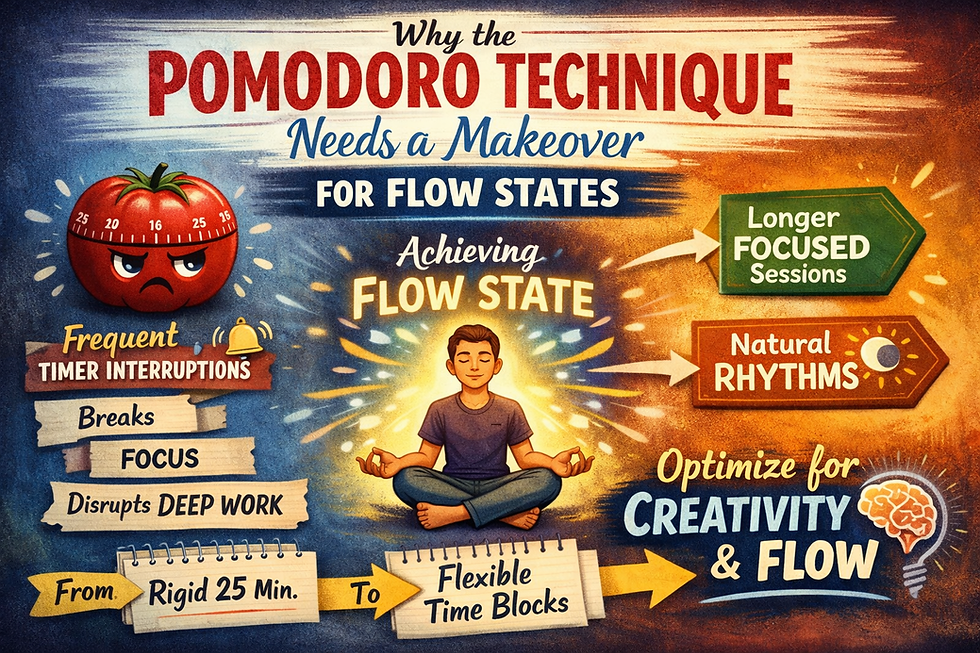
Living with ADHD means facing unique challenges when it comes to productivity. The classic Pomodoro technique, with its fixed 25-minute work and 5-minute break cycles, often feels rigid and ineffective for many with ADHD. This post explores how adapting this method and embracing flow states can transform your work habits, helping you double your productivity without burning out.
Why Traditional Pomodoro May Not Work for ADHD
The Pomodoro technique is popular because it breaks work into manageable chunks. Yet, for many with ADHD, the 25/5 split can feel arbitrary and disruptive. Research and anecdotal evidence show that ADHD brains often struggle with:
Sustaining attention for fixed intervals
Difficulty transitioning between tasks and breaks
Over- or underestimating needed break time
The rigid timing can cause frustration, leading to procrastination or burnout. For example, a 5-minute break might feel too short to decompress or too long to maintain momentum.
Modifying Pomodoro for ADHD Productivity Hacks
Adjusting Pomodoro intervals to fit your natural attention span can make a huge difference. Here’s how to tailor it:
Identify your optimal focus window: Track how long you can work before your mind wanders. This might be 15, 30, or even 50 minutes.
Customize break length: Some need longer breaks to reset, others prefer shorter ones to stay in rhythm. Experiment with 7-10 minutes or micro-breaks of 2-3 minutes.
Use flexible cycles: Instead of strict 25/5, try 40/10 or 15/5 depending on task complexity and energy levels.
Incorporate movement or sensory breaks: Physical activity or sensory input during breaks can help reset focus for ADHD brains.
For instance, one person found that working for 40 minutes followed by a 10-minute walk outside helped maintain focus and reduce restlessness. Another preferred 15-minute sprints with 5-minute mindfulness exercises.
Understanding Flow States and Their Role in Productivity
Flow states describe moments of deep immersion where time seems to disappear, and focus sharpens. For people with ADHD, flow can feel like a superpower, enabling intense concentration and creativity.
What Creates Flow?
Clear goals: Knowing exactly what to achieve keeps the mind engaged.
Immediate feedback: Seeing progress or results helps maintain motivation.
Balance of challenge and skill: Tasks should be neither too easy nor too hard.
Flow states allow for deep work for neurodivergents, where distractions fade and productivity peaks.
How to Cultivate Flow with ADHD Productivity Hacks
Achieving flow requires intentional strategies:
Minimize distractions: Use noise-cancelling headphones, block distracting apps, or create a dedicated workspace.
Set specific, achievable goals: Break tasks into clear steps to avoid overwhelm.
Use your modified Pomodoro cycles: Longer work periods aligned with your focus span support flow.
Engage in tasks that interest you: Passion fuels flow and sustains attention.
Practice mindfulness and grounding techniques: These can help transition into flow by calming a restless mind.
For example, a writer with ADHD might block 50 minutes for drafting a chapter, turn off notifications, and use a timer aligned with their focus rhythm. This setup supports entering flow and maintaining deep work.
Related Articles
Combining ADHD Productivity Hacks with Deep Work
Deep work means working without distraction on cognitively demanding tasks. For neurodivergents, this can be challenging but rewarding.
Schedule deep work during peak energy times: Identify when your focus is strongest, often morning or after a break.
Use visual timers and reminders: These help maintain awareness of time without breaking concentration.
Allow flexibility: If focus wanes, switch tasks or take a break rather than forcing productivity.
Track progress: Seeing accomplishments boosts motivation and helps adjust strategies.
By blending modified Pomodoro techniques with flow cultivation and deep work principles, productivity becomes more natural and less draining.
Practical Examples of ADHD Productivity Hacks in Action
Software developer: Uses 45-minute coding sprints with 15-minute walks, combining physical movement with mental reset.
Student: Breaks study sessions into 20-minute focused blocks with 10-minute creative breaks like drawing or music.
Freelance writer: Sets clear daily goals and uses noise-cancelling headphones to enter flow during 50-minute writing sessions.
These examples show how personalizing routines based on ADHD traits leads to better focus and output.




Comments